

Newspaper & Magazine Framing in Wakefield, RI
Newspaper articles and magazine covers preserve and display the milestones, accomplishments and fun happenings in life. They're also among the most fragile things people bring us, because newsprint is manufactured to be cheap and disposable rather than lasting.
When you want to frame a newspaper article, the paper itself is the problem to solve.
A Piece We're Proud Of
A customer brought in an article about her great-great-grandfather, who took up woodworking as a hobby after he retired and spent over a year building a table from 15,000 individual pieces of wood. We chose a fabric mat and a moulding that complemented the design of the table shown in the photograph. Her family history now hangs proudly on her wall.
What We Frame
- Newspaper articles and clippings
- Magazine covers and feature spreads — frame a magazine cover from a milestone issue
- Historical newsprint and front pages
- Obituaries, engagement and birth announcements
- Sports coverage and awards announcements
Why Newsprint Is a Special Case
The Paper Is the Problem
Newsprint is manufactured from mechanical wood pulp with the lignin left in, because it's designed to be cheap and read once. Lignin breaks down into acid on exposure to light and air, which is why a newspaper left on a windowsill yellows within days and becomes brittle within years. The deterioration is built into the material.
Show-Through
Newsprint is thin and only semi-opaque. Text printed on the reverse side is often faintly visible from the front, and it becomes considerably more noticeable once the page is mounted flat against a light backing and lit on a wall.
Folds
Newspapers are folded before anyone thinks to save them, and fold lines weaken the fibers along the crease. Those lines don't flatten out entirely, and over time they're where tearing begins.
Why We Recommend Scanning the Original
We often recommend scanning your newspaper article rather than framing the original. There are two practical reasons. Scanning lets us eliminate wrinkles and folds that would otherwise be locked under glass permanently. It also avoids show-through, where the printing on the reverse side of the page becomes visible against the backing — a very common problem with thin newsprint.
When we scan, we'll usually build a pocket on the back of the framed piece where the original newspaper can be stored safely. You keep the original, and the piece on the wall looks the way you want it to.
Why Reproductions Are Common Here
These three issues together are why framing a scan rather than the original is standard practice for newsprint, and why it's more common with newspaper than with almost any other kind of document. A reproduction can be printed on stable, archival paper, with fold lines and show-through addressed, while the original stays protected from light entirely.
For Very Old or Brittle Clippings
When a clipping is especially old or brittle, we scan and print a reproduction so we're not handling the fragile original at all, or we encapsulate the item to protect it going forward. For chemical deacidification of a historically significant document, we can refer you to a paper conservator.
Archival Materials Matter Here
Newsprint is highly acidic and begins yellowing and turning brittle within a few years. Framing an article against ordinary backing board accelerates that process considerably. Conservation framing materials and UV-protective glazing slow it dramatically.
Common Questions
How long does newspaper framing take?
A standard newspaper or magazine clipping typically takes 1 to 2 weeks.
Should I frame the original or a copy?
We often recommend framing a scan, both to remove wrinkles and to prevent show-through from the reverse side. Your original is returned to you, usually stored in a pocket built into the back of the frame.
Can you fix a clipping that's already yellowed?
We can scan it and improve the appearance in the reproduction. The original's yellowing can't be reversed, but it can be halted with archival framing.
What if my clipping is torn or very brittle?
Bring it in as it is, without taping or trimming it. We'll scan and print a reproduction, or encapsulate the original to protect it.
How much does it cost?
Pricing depends on size and materials, and we quote at your consultation at no charge. Scanning is handled in-house alongside our professional printing.
Schedule a consultation or explore all our custom framing services.
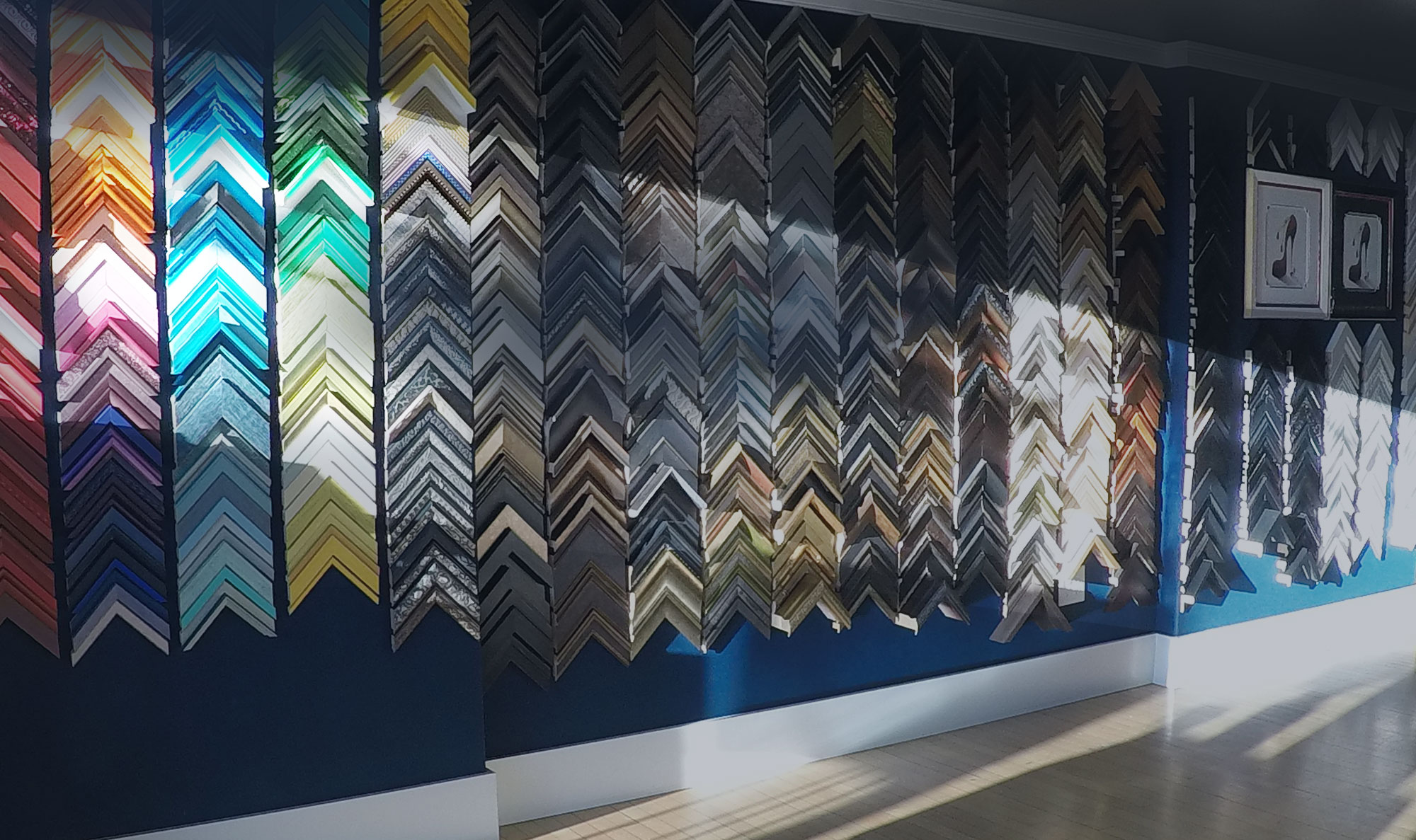
Finishing Touches
We assist each client in finding just the right design and combination of materials that is best for the artwork and suits the individual’s tastes and budget. We deliver the best quality workmanship ensuring that your framed artwork can be enjoyed and appreciated forever.