
Needlework Framing in Wakefield, RI
Needlework framing requires knowledge that general framing does not. The techniques used for a contemporary cross stitch piece are different from those required for a fragile vintage sampler, and the wrong mounting method can permanently distort a piece that took months or years to complete.
Needlework We Frame
- Cross stitch framing
- Embroidery framing
- Needlepoint framing
- Vintage and antique samplers
- Other handmade textiles and linens
Why Needlework Is Framed Differently
A work on paper is flat, stable and uniform. Needlework is none of those things, and the differences drive every decision in framing it.
- Fabric Behaves Under Tension: Evenweave fabrics like linen and Aida have a defined thread count, and the grain must stay square through mounting or the finished piece will visibly skew. Distortion introduced during mounting is difficult to correct afterward, because the stitches themselves hold the fabric in its new shape.
- Texture Needs Air: Stitching sits above the surface of the ground fabric, sometimes considerably so with techniques that use raised or padded stitches. Glazing resting directly on that texture flattens it and, over time, can cause the threads to adhere to the glass as humidity cycles. Spacers or a window mat hold the glazing clear of the surface, which is why almost all needlework is framed with one or the other.
- Fiber and Light: Dyed threads fade faster than most pigments on paper, and the rate varies dramatically by color. Reds and purples typically go first. Silk is more light-sensitive than cotton or wool. For a piece representing months or years of work, UV-filtering glazing is a reasonable precaution regardless of where it hangs.
- Before You Bring It In: It's generally best to bring a finished piece flat and unmounted rather than attempting to secure it to a backing yourself. Mounting decisions are difficult to reverse, and a framer has more options working from the piece as it came off the frame or hoop.
How We Mount Your Piece
We choose the most appropriate mounting method for each piece we receive, based on the fabric, age, weight and condition of what you bring us. We never use adhesives on needlework. Adhesive residue is nearly impossible to remove and permanently alters the fibers it touches.
We also use spacers or a mat to hold the glazing off the surface of the stitching, so the texture that makes needlework worth framing stays visible rather than being pressed flat under glass.
Vintage & Fragile Pieces
We can frame fragile and delicate textiles, and we've worked on many vintage samplers over 100 years old. We love these projects and show the utmost care for these precious pieces.
For a sampler, we prepare a fabric-covered substrate and hand stitch the piece to that fabric, so it's fully supported across its entire surface rather than hanging from its edges. We match our stitching to the original threads, so our work is almost invisible in the finished piece.
Preserving Handmade Work
Needlework is almost always irreplaceable, which is why we recommend conservation framing materials for these pieces. Acid-free mats and backing, spacers to keep glazing off the fibers, and UV-protective glass all help preserve thread color and fiber integrity over decades of display.
Common Questions About Needlework Framing
How long does needlework framing take?
A typical needlework piece takes 2 to 3 weeks to frame. Hand-mounting takes longer than a standard print, and we don't rush it.
Can you frame an antique sampler that's very fragile?
Yes. Fragile and delicate textiles are exactly the kind of piece that benefits most from specialized handling. Antique samplers are hand stitched to a supportive substrate rather than stretched or pinned.
Will the glass flatten my stitches?
Not when the piece is framed properly. We use spacers or matting to create an air gap between the glazing and the needlework, preserving the surface texture.
Do you use adhesives?
Never on needlework. We use reversible mounting methods appropriate to each individual piece.
How much does it cost?
Pricing depends on size, mounting method and materials. We quote at your consultation, and there's no charge for the consultation or design process.
Bring your finished piece in for a consultation, or explore all our custom framing services.
Finishing Touches
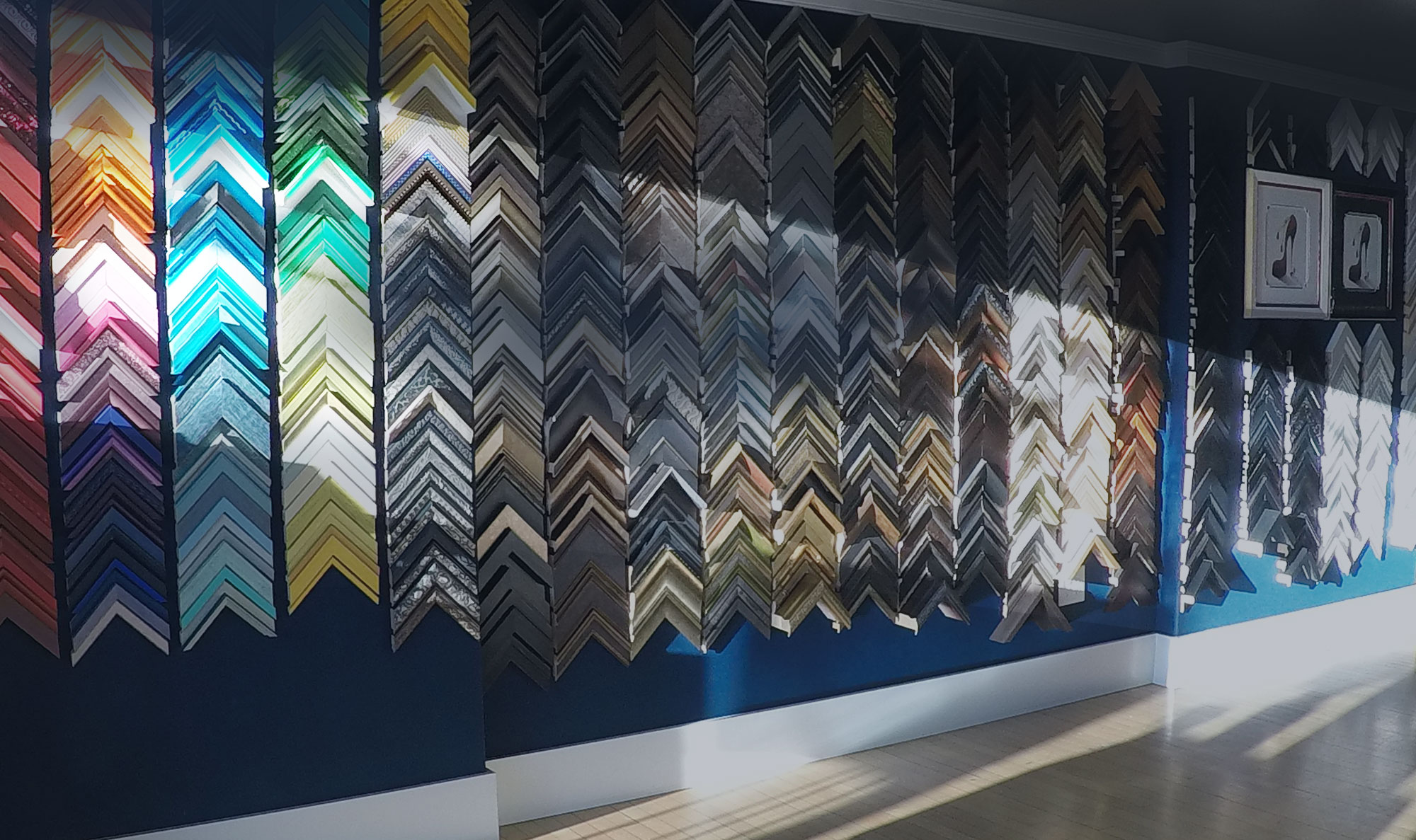
We assist each client in finding just the right design and combination of materials that is best for the artwork and suits the individual’s tastes and budget. We deliver the best quality workmanship ensuring that your framed artwork can be enjoyed and appreciated forever.