
Conservation Framing in Wakefield, RI
Conservation framing is the standard for protecting artwork, documents and objects from light exposure, acid damage and environmental wear. At Finishing Touches Picture Framing we follow conservation framing practices endorsed by the Library of Congress.
For any item someone wants to preserve for the future, conservation matters. We always recommend our conservation materials to our customers, because the cost of doing it properly the first time is almost always less than the cost of the damage that follows when it isn't.
What Is Conservation Framing?
Conservation framing — also called museum quality framing or archival picture framing — uses materials selected specifically to prevent deterioration over time. Ordinary mats and backing boards contain acid. That acid migrates into whatever it touches, leaving a permanent brown line inside the mat opening and eventually embrittling the paper itself. Archival materials don't do this.
What "Archival" Actually Means
Archival is a widely used term, and it's worth knowing what sits behind it.
Paper products are made from wood pulp, which contains lignin, a naturally occurring compound that breaks down into acid as it ages and is exposed to light. That acid is what turns old newsprint brown and brittle. Standard mat board and backing board contain lignin. Conservation-grade board is either buffered to neutralize acidity or made from cotton fiber, which contains no lignin at all. Museum-grade rag board is 100 percent cotton.
Acid migration is the mechanism that causes damage. Acid moves from the board into anything touching it, which is why a piece framed against ordinary backing shows a distinct brown line exactly where the mat opening sat. The damage is permanent and follows the shape of the materials that caused it.
How Light Damage Works
Fading is cumulative and irreversible. It's a function of intensity multiplied by time, which means a piece in indirect light for twenty years can show as much damage as one in direct sun for two. Ultraviolet light causes the most damage per unit of exposure, which is why UV-filtering glazing matters, but visible light fades pigments as well. No glazing eliminates fading entirely.
Some pigments are far more fugitive than others. Reds, purples and yellows in watercolors, inks and dyed textiles typically fade first. Photographic prints from the 1970s and 1980s are particularly vulnerable, because the color couplers used in that era were chemically unstable.
How We Protect Your Artwork
- Acid-free, archival mats and backing board
- UV-protective glazing to reduce fading from light exposure
- Reversible mounting, so the artwork or object can be removed unchanged if ever needed
- Glass spacers that keep glazing from resting directly against the surface
- Sealed construction that guards against humidity, dust and insects
What We See Go Wrong
We regularly see damage caused by earlier, non-archival framing. The most common problems are adhesives that bond permanently to the piece, acidic mats and backing materials that yellow and migrate discoloration into the artwork, non-conservation glass that lets colors fade, and glazing placed directly against the surface with no spacer to protect it.
None of these are unusual. They're what standard framing looked like for decades, and they're why so many pieces from the 1970s and 1980s come to us already damaged.
Which Pieces Need Conservation Framing?
We recommend archival framing for original artwork, limited edition prints, historical documents, family photographs, needlework, newspaper clippings and anything with lasting sentimental or monetary value. If a piece can't be replaced, it should be framed to conservation standards.
Common Questions About Conservation Framing
Is conservation framing more expensive?
Somewhat. Archival mats, backing and UV glazing cost more than standard materials, but the difference is usually modest compared to the overall order. We'll show you both options with pricing at your consultation so you can decide.
Can you re-frame something already damaged by acidic materials?
Yes. We can re-mat and re-mount a piece that was previously framed with acidic, non-archival materials. This stops further damage going forward, though existing discoloration can't be reversed.
Does UV glass stop fading completely?
It reduces fading significantly but doesn't eliminate it entirely. Where you hang a piece matters just as much as the glazing you choose — keeping artwork out of direct sunlight is always worth doing.
What if my artwork itself needs repair, not just re-framing?
For actual restoration of damaged artwork, we can refer you to a trusted conservator. Framing and conservation of the artwork itself are two different specialties, and we'll tell you honestly which one you need.
How long does conservation framing take?
Most orders are ready in 1 to 3 weeks, the same as our standard custom framing.
Not sure what your piece needs? Bring it in and we'll tell you honestly. Schedule a consultation or explore all our custom framing services.
Finishing Touches
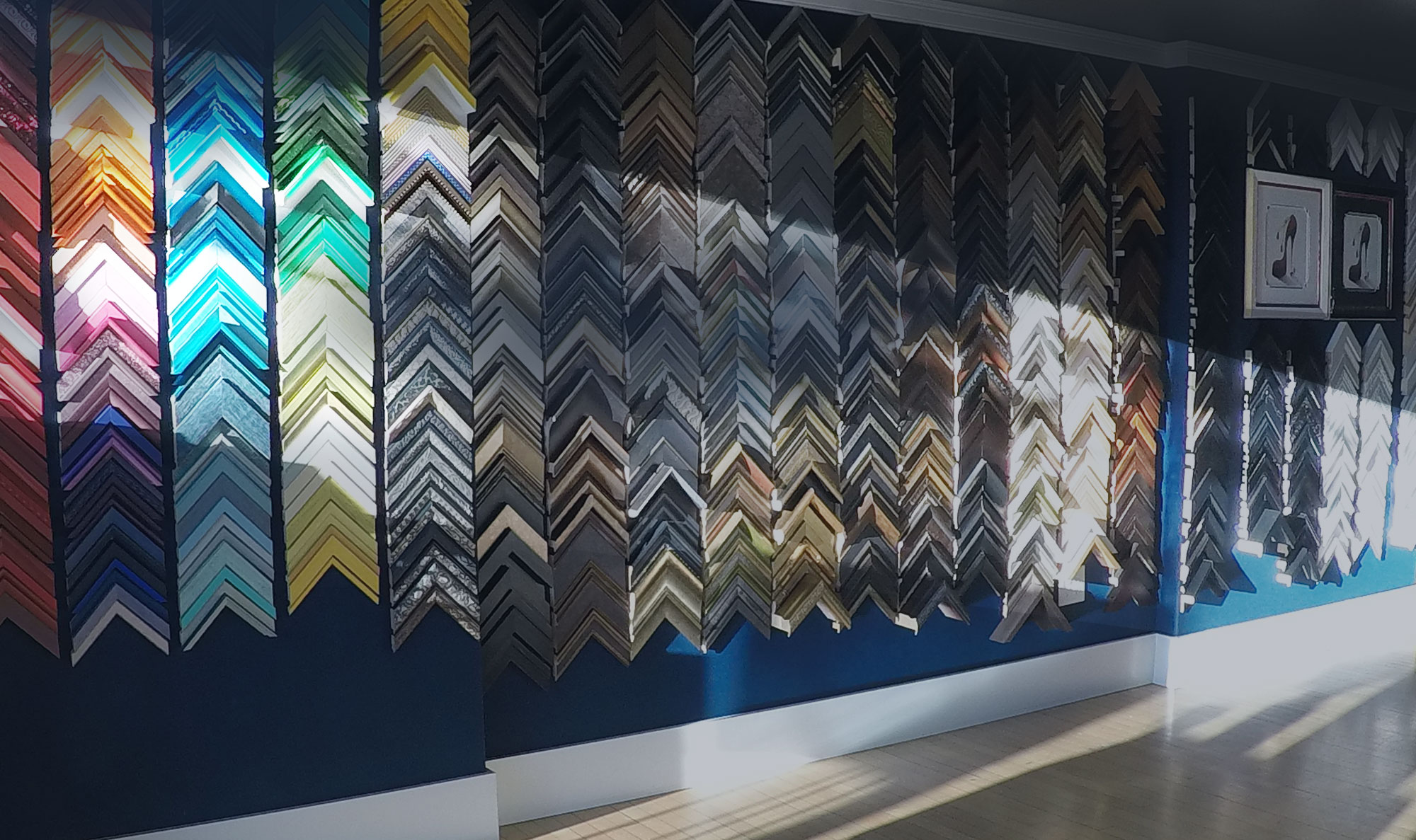
We assist each client in finding just the right design and combination of materials that is best for the artwork and suits the individual’s tastes and budget. We deliver the best quality workmanship ensuring that your framed artwork can be enjoyed and appreciated forever.